Home
Women’s Health Knowledge Center
What Causes Irregular Periods? 8 Reasons Women Shouldn’t Overlook

Why is my period late?
Why is my menstrual cycle longer than 35 days?
Is spotting for several days dangerous?
"Irregular periods" is one of the most frequently searched symptoms among women—whether it is a missed period, an irregular cycle, abnormal bleeding, or unpredictable timing. Sometimes, it can be caused by stress or insufficient sleep, but in other cases, it may be related to hormonal imbalances or gynecological conditions that require proper medical evaluation.
This article summarizes 8 common causes and offers helpful guidelines to help you better understand your body.
What is considered a normal menstrual cycle?

Generally, a normal menstrual cycle ranges from 21 to 35 days,
with bleeding lasting 3 to 7 days, and a flow that is neither too heavy nor too light.
According to guidelines from the American College of Obstetricians and Gynecologists, if your cycle is longer than 35 days, missed for more than 3 months, or if you experience frequent spotting, further medical evaluation should be considered.
8 Common Causes of Irregular Periods
1. Stress and Insufficient Sleep
Stress affects the hormones that control ovulation, which can delay or cause you to miss your period. This is highly common among working-age individuals facing high demands.
2. Rapid Weight Fluctuations
Gaining or losing weight too quickly impacts your hormonal balance. Both significant weight gain and weight loss can lead to irregular cycles.
3. PCOS (Polycystic Ovary Syndrome)
This is a leading cause of irregular periods. Women with PCOS often have infrequent cycles, acne, weight gain, and irregular ovulation.
4. Thyroid Disorders
Both hyperthyroidism (overactive thyroid) and hypothyroidism (underactive thyroid) can disrupt your cycle. A simple blood test can help provide a clear diagnosis.
5. Pregnancy
If your period is late, a pregnancy test should be the first step, even if you are using contraception.
6. Endometrial Hyperplasia or Polyps
An abnormally thick uterine lining or polyps can cause spotting or unusually heavy bleeding, which requires evaluation via ultrasound.
7. Use of Hormonal Contraceptives
When starting or stopping birth control, your cycle may become temporarily irregular.
8. Perimenopause
In women aged 40 and older, hormonal shifts begin to occur, which can cause periods to become less regular.
When should you see a doctor?
You should consult a doctor if:
You have missed your period for more than 3 months.
You experience abnormally heavy bleeding.
You experience severe pelvic pain.
You are planning to conceive but have irregular cycles.
A medical evaluation may include hormone blood tests, thyroid tests, and an ultrasound of the uterus and ovaries.
Are irregular periods dangerous?
In some cases, they are not dangerous and can be managed with lifestyle adjustments. However, if the irregularity is caused by hormonal conditions like PCOS or uterine lining abnormalities, professional care is recommended. Leaving missed periods unaddressed for too long can increase long-term health risks.
As recommended by the World Health Organization, regular health monitoring for women helps reduce the risk of future complications.
In Summary
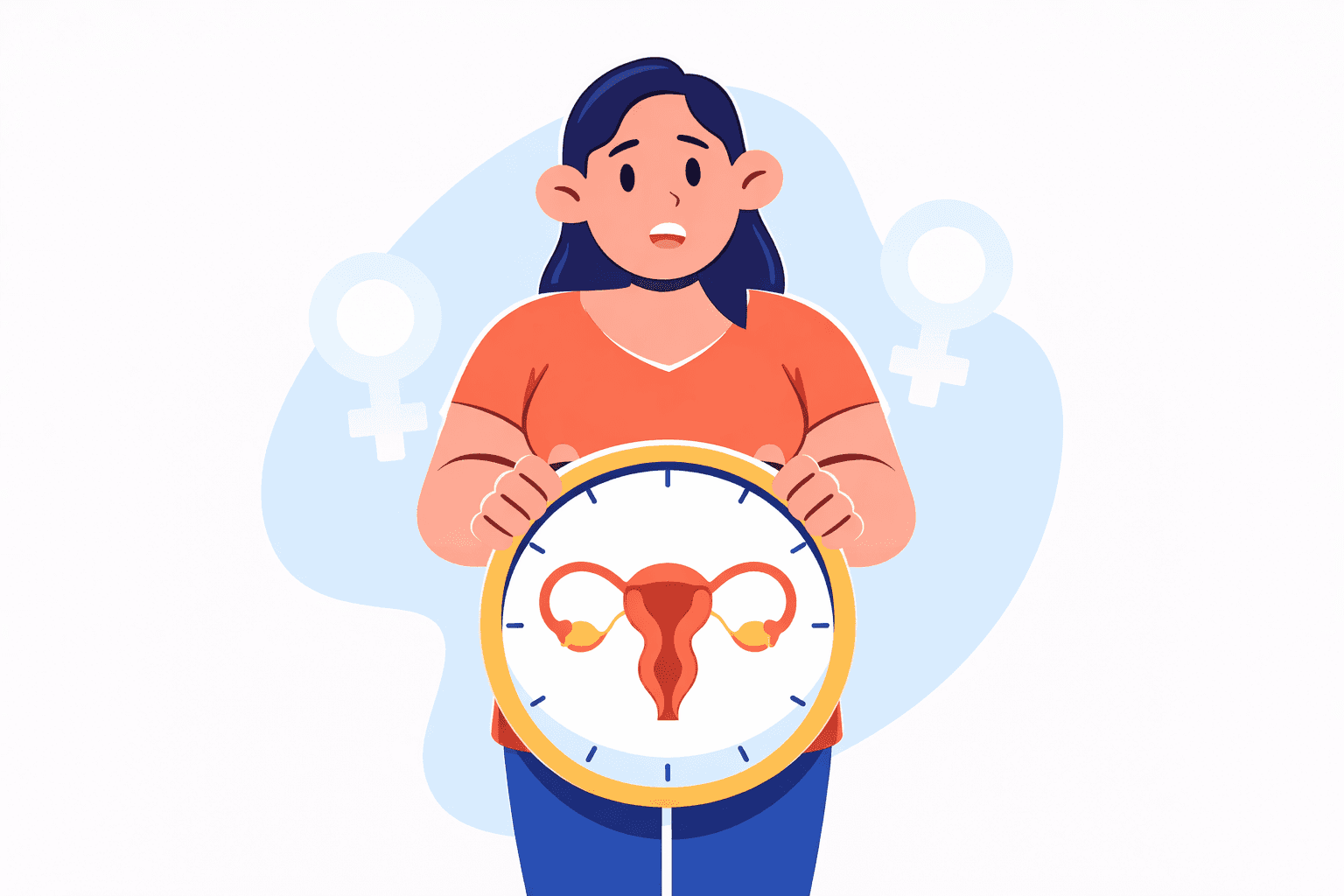
Irregular periods can be caused by stress, weight changes, hormonal imbalances, or underlying gynecological conditions.
If your cycle is consistently irregular or accompanied by other symptoms, seeking a professional evaluation is the best way to find the root cause. Addressing these concerns early helps prevent future issues and allows you to manage your health with confidence.
Author
Dr. Wichadet Wichulada
Obstetrician and Gynecologist, Subspecialist in Maternal-Fetal Medicine
Chulalongkorn Hospital
Research published in the International Journal of Transgender Health
References
American College of Obstetricians and Gynecologists. Abnormal Uterine Bleeding Guidelines.
World Health Organization. Reproductive health recommendations.
Williams Gynecology, 4th Edition.