Home
Women’s Health Knowledge Center
How Is PCOS Different from an Ovarian Cyst? 6 Differences Women Should Know Before Worrying

Many people mistakenly think PCOS means “cysts in the ovaries”
When an ultrasound shows “multiple small follicles,” they start worrying about whether surgery is needed.
The truth is
PCOS is a hormonal disorder
not a large fluid-filled cyst that requires surgery.
This article clearly explains how PCOS differs from ovarian cysts, whether it is dangerous, and how it should be managed.
What is PCOS?
PCOS (Polycystic Ovary Syndrome) is a hormonal imbalance that causes irregular ovulation.
Key features of PCOS include:
Irregular periods
Elevated male hormone levels
Ultrasound showing multiple small follicles arranged around the ovary
The international diagnostic criteria, based on the American College of Obstetricians and Gynecologists, state that at least 2 of the 3 criteria must be met to diagnose PCOS.
What is an ovarian cyst?
An ovarian cyst is a fluid-filled sac that develops in the ovary
Most are simple cysts that occur with the menstrual cycle and go away on their own.
Some types can become large, causing lower abdominal pain, or in some cases may require surgery.
6 differences between PCOS and ovarian cysts
1️⃣ Cause
PCOS is caused by hormonal imbalance
Ovarian cysts develop from an abnormal fluid-filled sac in the ovary
2️⃣ Number and appearance of cysts

PCOS shows multiple small follicles arranged around the ovary

Simple cysts are usually one large fluid-filled sac, or a few cysts
3️⃣ Associated symptoms
PCOS often causes irregular periods, acne, excess hair growth, and easy weight gain
Ovarian cysts often cause lower abdominal pain, or no symptoms at all
4️⃣ Need for surgery
PCOS does not require surgery
Some ovarian cysts, if large or complicated, may require surgery depending on the type and size of the cyst
5️⃣ Effect on pregnancy
PCOS may cause infertility because ovulation does not occur regularly
Most ovarian cysts do not affect pregnancy, except for certain types
6️⃣ Treatment approach
PCOS management focuses on balancing hormones, controlling weight, and inducing ovulation (if pregnancy is desired)
Ovarian cysts are usually monitored, or surgically removed in some cases
Is PCOS more dangerous?
PCOS is not an acute emergency
However, if left unmanaged, it may increase the risk of diabetes, high cholesterol, and abnormal thickening of the uterine lining.
Some ovarian cysts can cause sudden pain or ovarian torsion, but this is uncommon.
So if an ultrasound says “multiple follicles,” should you panic?
There is no need to panic right away
A doctor will assess your symptoms and hormone blood tests before making a diagnosis.
In many cases, the small follicles seen on ultrasound do not mean surgery is needed.
Short summary
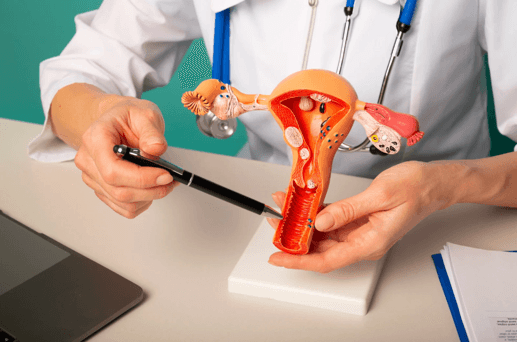
PCOS is a hormonal disorder
Ovarian cysts are fluid-filled sacs that develop in the ovary.
They are not the same
and their treatment approaches are clearly different.
If you have irregular periods, lower abdominal pain, or concerns about your ultrasound results, consulting a specialist can help you better understand your condition.
Author
Dr. Wichadet Wichchulda
Obstetrics and Gynecology specialist
Currently pursuing subspecialty training in Maternal-Fetal Medicine at King Chulalongkorn Memorial Hospital
Research published in International Journal of Transgender Health
References
American College of Obstetricians and Gynecologists. Practice Bulletin: Polycystic Ovary Syndrome.
World Health Organization. Reproductive health guidelines.
Williams Gynecology, 4th Edition.