Home
All Services
Cervical cancer screening
Cervical cancer screening
Cervical Cancer
Screening
Cervical cancer screening
What is Cervical Cancer?
Cervical cancer is one of the most common cancers among women and is also a cause of death for many women each year
In fact, it is a cancer that can be prevented and detected at an early stage
Cervical cancer develops gradually from changes in the cells of the cervix. In the early stages, it often causes no symptoms. Most patients only realize something is wrong when they experience abnormal symptoms such as unusual bleeding, and in many cases the disease may already be advanced
Regular pelvic examinations and cervical cancer screening can help detect abnormal cells at an early stage, before they become cancer, making treatment easier and increasing the chance of a full recovery
Causes and Risk Factors
Infection with cancer-causing HPV
Having sexual intercourse at a young age
Having multiple sexual partners
Never having had cervical cancer screening before
What Is HPV?
HPV (Human Papillomavirus) is a sexually transmitted virus. Some strains can cause cervical cancer, and it often has no symptoms in the early stages.
Screening Methods
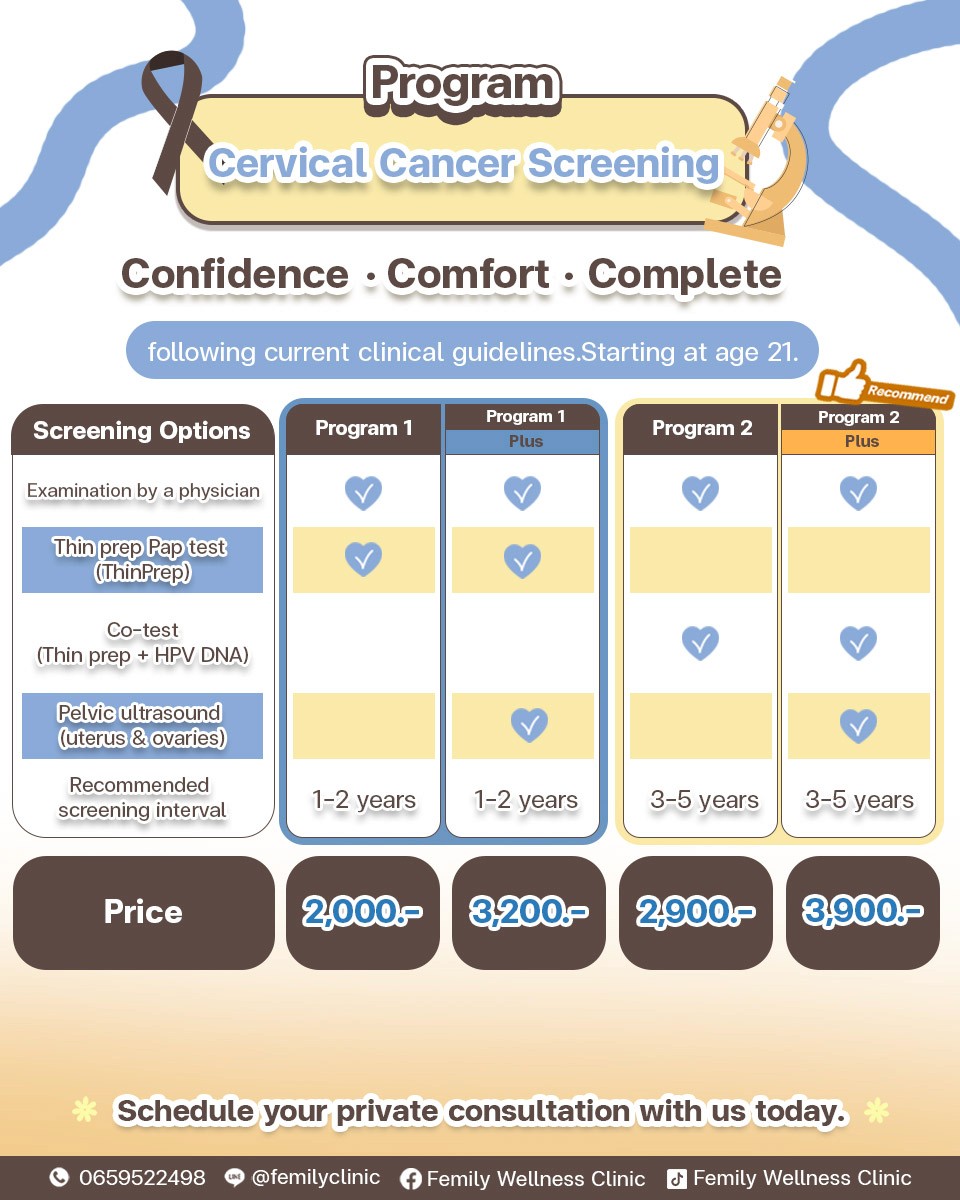
1. Thin Prep
Detects abnormalities in cervical cells and helps screen for risk before it becomes cancer.
2. Co-test (Test Thin Prep + HPV DNA)
A technique with higher accuracy
Combines Thin Prep with testing for high-risk HPV strains (a cause of cervical cancer)
Available in both 14-strain and 32-strain versions (for greater accuracy and confidence)
👩🏻⚕️Recommended screening age
Age 21–24: Thin Prep screening every 1–2 years
Age 25 and older: Co-test every 3–5 years
Continue screening until age 65
Special note: Even if you have already received the HPV vaccine, regular screening is still necessary
**If you are still unsure which type of screening is right for you, you can visit the clinic and consult directly with a specialist to help recommend the most appropriate and reassuring option for you**